Forget the Itinerary: How Getting Wonderfully Lost Rewrote My Best Travel Memories
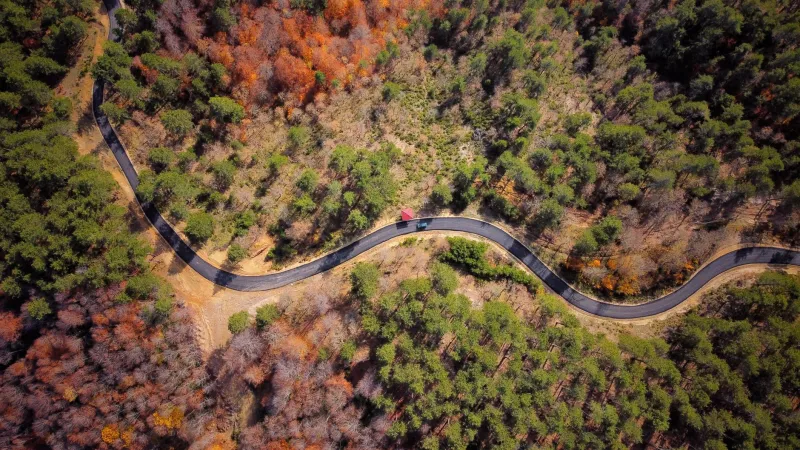
There's a particular kind of panic that hits when you realize you've missed your turn — that flash of oh no followed immediately by the GPS recalculating in a voice that sounds vaguely judgmental. For most of my early travel years, I treated that moment like a minor catastrophe. I'd correct course, get back on track, and mentally check the box I'd nearly missed.
Then one afternoon in the Texas Hill Country, I didn't correct course. I just... kept driving.
What followed was a three-hour wander through small towns I'd never heard of, a gas station conversation that turned into an impromptu history lesson about German immigrant settlements, and a meal at a roadside barbecue spot that had no Yelp presence and a line out the door. None of it was planned. All of it was extraordinary. That day quietly rewired the way I travel.
The Problem with Over-Planning (And Why We Do It Anyway)
Look, I get the appeal of a tightly scheduled trip. You've got limited PTO, flights to catch, and maybe a partner or kids who need some structure. Planning feels responsible. It feels safe. And honestly, there's genuine pleasure in researching a destination and building out a beautiful itinerary.
But here's the thing nobody really talks about: hyper-structured travel creates a kind of tunnel vision. You're so focused on getting to the next thing that you stop actually experiencing the place you're in. You're moving through a destination rather than inhabiting it.
Psychologists call this "goal-shielding" — the mental tendency to filter out information that doesn't serve your current objective. When your objective is "get to the museum by 10 a.m.," you're literally training your brain to ignore everything else. And everything else is often where the magic lives.
The First Time I Let Myself Wander
After that Texas afternoon, I started experimenting more deliberately. On a solo trip up the Oregon Coast, I gave myself one completely unscheduled day. No reservations, no must-sees, just a tank of gas and a loose northward direction.
I ended up pulling off at a sea stack overlook I'd spotted purely because the light looked interesting. A couple from Medford was there doing the same thing, and they mentioned an art gallery in a nearby town that a friend had opened — not exactly a tourist attraction, just a converted barn full of paintings by a local woman in her seventies who'd only started painting after retirement.
I spent two hours in that barn. I bought a small watercolor of the coast that now hangs in my hallway. It is, without question, the most meaningful souvenir I've ever brought home from anywhere.
None of that happens if I'm following a schedule.
Practical Ways to Build Spontaneity Into Your Trips
Now, I'm not suggesting you show up somewhere with zero preparation and hope for the best. There's a difference between strategic looseness and pure chaos. Here's how I've learned to build in room for the unexpected without completely abandoning structure.
Leave one day (or half a day) deliberately blank. Seriously, just block it off in your plans as "open." Don't feel guilty about it. That empty space is where the good stuff happens.
Pick a direction, not a destination. On road trips especially, try choosing a general compass direction for a morning and just driving. Set a loose turnaround time, but let curiosity dictate the route. The American landscape rewards this approach — from the back roads of Vermont to the high desert of New Mexico, there are entire worlds just off the main highway.
Follow the handwritten signs. Farm stands, local festivals, antique shops, roadside attractions with charmingly misspelled banners — these are breadcrumbs toward authentic local life. If someone went to the trouble of making a hand-lettered sign, something real is happening there.
Give yourself permission to stop. This sounds obvious, but so many travelers blow past interesting things because stopping feels like losing time. It's not. It's the whole point.
What Unplanned Travel Actually Teaches You
Beyond the individual discoveries, there's something deeper that happens when you travel without a rigid script. You start to develop genuine comfort with uncertainty — and that's a skill that extends well beyond vacation.
In Savannah, Georgia, a wrong turn through a residential neighborhood led me to a second-line parade I had no idea was happening. In Marfa, Texas, wandering without purpose introduced me to a community of artists who'd built something genuinely strange and wonderful in the middle of the desert. In the Upper Peninsula of Michigan, getting turned around on a forest road brought me to a waterfall that felt, in that moment, like it existed only for me.
These weren't accidents. They were the natural result of staying open.
Travel, at its best, is less about seeing a list of things and more about being genuinely present in a place. The itinerary is a starting point, not a contract. The map is a suggestion. The detour is, more often than not, the destination.
Your Next Chapter Starts Off-Script
The IT Experience has always been about finding the story worth telling — and the stories worth telling almost never come from following the most direct route. They come from the wrong turn that felt right, the unplanned stop that stretched into an afternoon, the moment you decided to see what was down that road.
So the next time your GPS starts recalculating, maybe just let it. See where you end up. Chapter two of your travel story might be waiting somewhere you never thought to look.