Suddenly a Stranger in Your Own Zip Code: The Culture Shock Nobody Warned You Was Coming Home
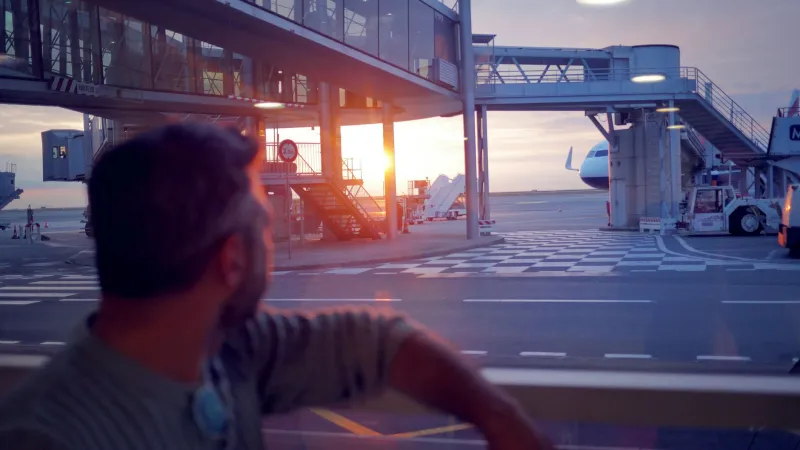
You spent weeks — maybe months — mentally preparing for the adjustment of being somewhere unfamiliar. A new language. Different food. Streets that didn't make sense yet. You packed your patience right alongside your toiletries and told yourself you were ready for the disorientation.
And then you came home.
And somehow that was the part that broke you a little.
There's a phenomenon that frequent travelers and long-term expats talk about in hushed, slightly embarrassed tones. It doesn't have the romantic ring of "wanderlust" or the Instagram-ready glow of a new stamp in your passport. It's called reverse culture shock, and it's the deeply weird, occasionally destabilizing experience of returning to your home country and finding that it no longer quite fits the person who left.
The Familiar Becomes the Strange
Here's how it usually starts: You're back in your hometown, standing in a grocery store you've visited a thousand times, and something feels off. The sheer size of everything — the gallon jugs, the family packs, the aisles that seem to stretch into another time zone — suddenly registers in a way it never did before. You spent three months navigating a French marché where you bought exactly what you needed for that evening's dinner. Now you're standing in front of forty-seven varieties of salad dressing and feeling mildly overwhelmed.
Or maybe it's the volume. American social spaces can be loud in a way you stopped noticing until you'd spent significant time somewhere quieter — a Japanese neighborhood, a small Portuguese town, a rural stretch of New Zealand. Coming back to the ambient roar of a TGI Fridays on a Friday night hits differently when you've recalibrated.
None of this means anything is wrong with your home. That's the part that's so hard to explain to the people who didn't go anywhere.
Why Home Hits Harder Than Anywhere Else
When you arrive in a foreign country, you expect to be confused. That expectation is actually a kind of protection — it gives you permission to feel lost, to ask dumb questions, to move slowly through the world until you find your footing. You extend yourself enormous grace because you know you're a guest.
But when you come home, that permission evaporates. You're supposed to know how this works. You grew up here. You have a Social Security number and a strong opinion about which regional fast food chain is superior. This is your native terrain.
So when it starts feeling foreign, there's no framework for it. There's just this unsettling cognitive dissonance — the gap between what your brain expects (comfort, ease, belonging) and what you're actually experiencing (mild alienation, a strange sense of watching yourself from a slight distance).
Psychologists sometimes describe it as a loss of "cultural autopilot." Travel, especially extended travel, forces you to become hyper-conscious of every social interaction, every norm, every unspoken rule. You can't coast. You have to pay attention. And once you've been doing that for long enough, you can't just switch it off when you land at O'Hare or LAX. You come home still watching. Still noticing. And what you notice, suddenly, is everything you used to take for granted.
The Conversations That Feel the Most Foreign
Probably the sharpest edge of reverse culture shock isn't the grocery store or the traffic or the size of the portion plates. It's the small talk.
You sit down with people you love — family, old friends, coworkers — and you realize you're operating on completely different frequencies. They want to catch up, and you want to talk, and those two things turn out to be surprisingly different. You've had experiences that rearranged something fundamental in you, and the available vocabulary for that doesn't really fit into a fifteen-minute coffee catch-up.
So you compress. You summarize. You say "it was amazing" because "it dismantled my assumptions about how I thought the world worked and now I'm not sure who I am in relation to the place I grew up" is a lot for a Tuesday afternoon.
And then you listen to conversations about things that feel, at least right now, very small — local gossip, TV recaps, complaints about the commute — and you feel guilty for finding them small, because these are people you love, and their lives are not small, and yet here you are, floating slightly above the conversation like a balloon that's drifted off its string.
The Liminal Space You Didn't Know You'd Be Living In
What nobody tells you is that returning home after real travel — the kind that changes you — puts you in a strange in-between place. You're not a local anymore, not really. But you're not a traveler either. You're something in the middle: a person who carries the memory of seeing their own culture from the outside, and can't quite unsee it.
This is actually the most valuable thing travel does. It's also, in the short term, kind of lonely.
The good news is that it's temporary. Not the growth — that sticks. But the acute disorientation, the floating feeling, the sense that you're watching your own life through glass? That fades as you slowly rebuild your context. As you find the people who get it, or help the people who don't understand it yet. As you start weaving what you learned out there into the texture of your everyday life here.
How to Actually Navigate It
First: give yourself the same grace you'd give yourself in a foreign country. You are in a foreign country, in a sense. The version of home you left no longer exists, partly because home changed while you were gone, and partly because you did.
Second: find your people. Not necessarily other travelers (though that helps), but anyone who's curious about the world, who asks follow-up questions, who wants to understand what you actually saw and felt rather than just confirming that yes, the food was incredible.
Third: let yourself grieve a little. It sounds dramatic, but there's a real loss in the transition — a mourning of the person you were before you left, of the uncomplicated relationship you used to have with home. That grief is legitimate, and sitting with it is more useful than trying to fast-forward past it.
And finally: trust that the strangeness is a feature, not a bug. The fact that home feels foreign right now means you actually went somewhere. You didn't just take a vacation — you took a chapter of your life and wrote something new in it.
Chapter Two, as it were.
The disorientation means it worked. And eventually, you'll find a way to carry both worlds at once — the one you come from and the one that changed you — without feeling like a stranger in either.