The Strangers in the In-Between Places Who End Up Staying With You Forever
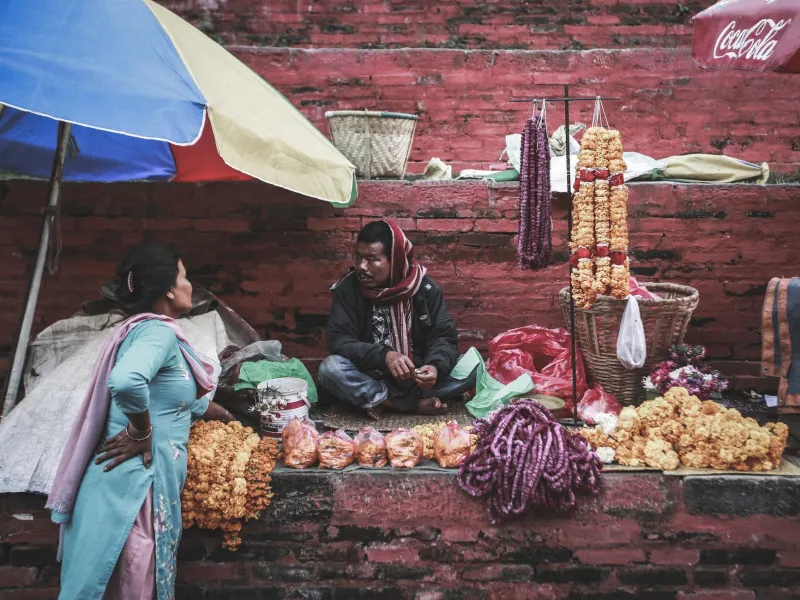
The temple was beautiful. You have the photos to prove it. But if someone asked you to describe the most vivid moment from that entire trip — the one you'd reach for first — there's a decent chance it's not the temple. It's the woman selling dried mango outside who laughed at your pronunciation and then spent twenty minutes teaching you the right way to say it. It's the retired schoolteacher on the overnight train who explained his country's political history with the patience and precision of someone who'd been waiting his whole life for someone to ask. It's the teenager behind the pharmacy counter who, when you couldn't figure out what you needed, just gently took the box from your hand and found you the right one.
The margins of travel are where the real stuff lives. And most of us stumble into them by accident because nobody told us to look.
Why the Unplanned Conversations Hit Different
There's a structural reason why spontaneous human connection lands harder than anything you scheduled. When you walk into a famous museum or book a guided tour, you arrive with a frame. You know what you're supposed to feel, roughly what you're supposed to see, and approximately how long it should take. The experience is filtered through expectation before it even begins.
But when a stranger starts talking to you at a market stall — really talking, not the transactional kind — there's no frame. You're not performing tourist. They're not performing host. You're just two humans in proximity with a little time and mutual curiosity, and that combination turns out to be surprisingly potent.
Psychologists call this the "end of history illusion" in reverse: we underestimate how much a brief encounter can affect us because we assume impact requires duration. It doesn't. Eleven minutes with the right person in the right moment can rewire something. Ask anyone who's ever had a conversation on a long flight that they still think about years later.
The Specific Places Where It Happens
If you want more of these moments, it helps to know where they tend to cluster. Not at the Instagrammed overlook. Not at the tourist-facing restaurant with the laminated menu in six languages. The in-between places.
Waiting rooms and transit hubs. Airports are too chaotic and too anonymous. But train platforms, bus depots, small regional ferry terminals — these are where people settle into a kind of enforced patience that opens them up. You're all just waiting together, and waiting together is one of the oldest human bonding mechanisms there is.
Local markets, not the curated ones. Every major city now has a "food market" that's essentially a lifestyle brand with a brick-and-mortar location. Skip it. Find the one where the vendors are buying and selling for themselves, not performing for visitors. The difference in energy is immediate.
Neighborhood coffee shops and tea houses. Not the chain, not the hotel lobby. The place where the same five people come every morning and the owner knows their order. Sit at the counter if there is one. Bring nothing to read. Let the silence invite something in.
Pharmacies, hardware stores, bakeries. The utilitarian businesses. The ones travelers almost never enter because they're not on the list. These are where you meet people who are just living their lives and have no particular reason to perform anything for you — and that authenticity is exactly what makes the interaction memorable.
What Makes a Local Actually Want to Talk
Here's where American travelers sometimes trip themselves up: the assumption that enthusiasm is the key. That if you're visibly excited about someone's country, they'll want to engage. Sometimes that's true. But more often, what actually opens a conversation is genuine curiosity without an agenda.
There's a difference between "I love your culture!" (which, however well-intentioned, centers the speaker) and "What's that you're cooking?" or "How long has this market been here?" One is a declaration. The other is an invitation. Locals can feel the difference instantly.
Also: put the phone away. Not performatively, not with a big show of "look, I'm being present" — just actually put it in your pocket. Eye contact and physical availability are the two most powerful nonverbal signals that you're open to interaction. Most people respond to them without even consciously registering why.
The Ones Who Stay
Not every spontaneous conversation becomes a formative memory. Some are pleasant and forgettable, which is fine. But the ones that stick — the ones you find yourself retelling at dinner parties years later — tend to share a few qualities.
They involved some kind of genuine exchange, not just information transfer. Something was shared in both directions: a laugh, a small vulnerability, a moment of real confusion that both parties navigated together. They happened somewhere slightly uncomfortable or unexpected, which means your guard was already down. And they ended naturally, without either person trying to extend or formalize them. The impermanence is part of what makes them perfect.
You'll never see most of these people again. That's not a loss. It's the whole architecture of the thing. A conversation that exists only in that specific place and time, with no past and no future, has a particular kind of clarity that longer relationships rarely achieve.
How to Create Space Without Forcing It
The paradox of seeking spontaneous connection is that you can't manufacture it. But you can stop accidentally preventing it.
Slow down your transitions. The gap between one thing and the next is where encounters happen. If you're always rushing from landmark to restaurant to hotel, you're sealing yourself off from the in-between. Build margin into your days — not empty time that makes you anxious, but unhurried time that makes you available.
Say yes to the small invitations. Someone gestures for you to try something. A vendor asks where you're from with actual curiosity. A stranger sitting next to you on a bench makes a comment about the weather. These are doors, and they're easy to walk past. Try walking through a few more of them.
The famous places will still be there. They'll be exactly as advertised. But the conversation you didn't plan on having — the one that starts because you were just standing there, unhurried and open — that's the one that might actually change something.