The Empty Seat at the Window: Traveling Without the Person You Almost Brought
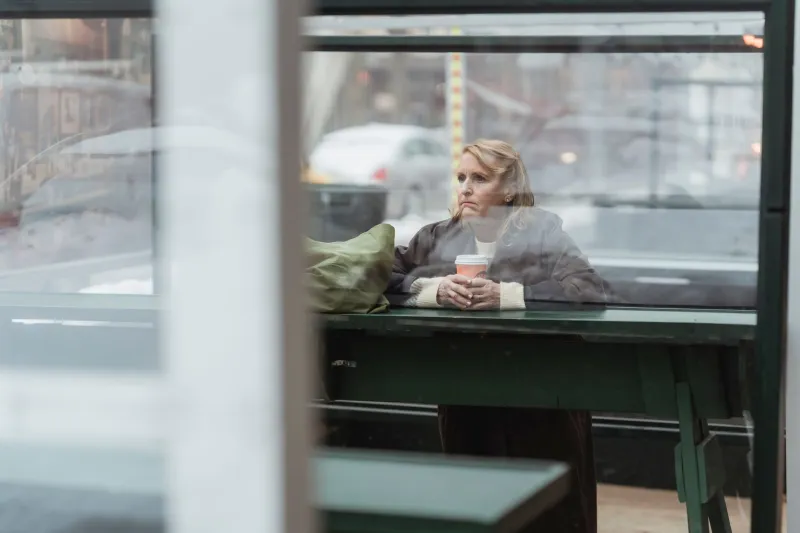
I almost asked my college roommate to come to Portugal with me. I had the text drafted. I even had a rough idea of the dates I'd suggest. And then I thought about the particular dynamic we'd developed over the years — the way she needs to plan everything two months out, the way I need to leave whole days unscheduled — and I deleted the draft. I went alone. I had a genuinely great trip.
And I thought about her constantly.
Not in a sad way, exactly. More like the way you think about a song when you're somewhere it would've been perfect to hear it. A kind of ambient awareness that this moment would've landed differently, or better, or just differently, with someone else in the frame.
The Phantom Companion
Every trip carries a ghost or two. The person who couldn't get the time off work. The friend who said they were in and then quietly wasn't. The family member you considered and then reconsidered. The relationship that was navigating something too delicate to survive a shared itinerary.
These absent people don't disappear when you board the plane. They travel with you in a strange, weightless way — showing up at the restaurant table you're sitting at alone, or at the viewpoint where you're taking a photo of yourself that feels a little hollow, or at the bar where a conversation with a stranger reminds you of the conversations you have with them.
Travel writing almost never acknowledges this. The narrative tends to be about who you brought, or the beautiful solitude of going alone. But the in-between space — the person you thought about bringing, the trip that exists in parallel in some other version of your life — that's where a lot of the real emotional texture lives.
Why Absence Shapes a Journey
There's something almost structurally true about this. The people we travel with determine what we notice, what we prioritize, what we're willing to slow down for. Travel with a foodie and you'll eat better than you planned. Travel with a history buff and you'll end up in museums you'd have walked past. The companion shapes the trip.
But so does the absence of a particular companion. When you're aware of who's not there, you start making choices that somehow reflect them anyway. You order the thing they would've ordered, just to see if they were right. You linger at the spot they would've loved, holding the moment a little longer than you might have otherwise. You send them a photo with a caption that tries and fails to explain why this particular corner of the world made you think of them.
In this way, the absent person is a kind of silent co-author of the experience. They're shaping it from a distance, without knowing they're doing it.
The Trip That Became About the Gap
Sometimes a journey becomes explicitly about processing who or what you're traveling without. Not a breakup trip, necessarily — though those are real and valid and probably deserve their own entire article. Just a trip where the absence of a specific person clarifies something about the relationship. About what you've been carrying. About what you're like when they're not around.
Solo travel does this in a particular way that's hard to replicate. When you're alone in a city where nobody knows you, you get a kind of unfiltered access to yourself that's genuinely rare in regular life. And part of what surfaces in that space is an accounting of your relationships — who you are in them, what you need from them, what you've maybe been avoiding.
The friend who didn't come might be the thing you're thinking through on that long train ride. Not because anything is wrong, but because travel creates the conditions for that kind of reflection. The quiet, the unfamiliarity, the removal from routine — it all conspires to make you honest with yourself in ways that Tuesday at your desk simply doesn't.
The Message You Composed and Didn't Send
Most travelers have a version of this: the long, rambling voice memo you recorded walking through somewhere beautiful, addressed to someone specific, that you never actually sent. Or the postcard you wrote in full and then slid into your own bag instead of a mailbox. Or the text thread where you kept sending photos without quite saying what you actually meant.
These are attempts to bridge the gap — to bring the absent person into the experience somehow, to make the trip feel less like something that happened to you alone and more like something shared, even retroactively.
What's interesting is that these unsent messages often clarify things. The act of composing them — of trying to translate the experience into language for a specific audience of one — forces a kind of articulation that generic journaling doesn't. You're not just recording what happened. You're explaining why it mattered, and to whom, and what it means that they're not here to see it.
What You Learn From the Empty Seat
The person you didn't bring — for whatever reason, practical or complicated or both — teaches you something about how you travel and who you are in motion. Their absence is a kind of negative space, and like all negative space, it has a shape.
Maybe what it reveals is that you're more self-sufficient than you thought. Maybe it reveals that you've been using travel companions as a buffer against actually sitting with yourself. Maybe it reveals that the relationship needs something you haven't been giving it, and you had to go three thousand miles away to figure that out.
Or maybe it reveals something simpler: that certain places are better experienced with certain people, and you already know exactly who belongs at that table by the window — you just haven't made the trip together yet.
That's not a loss. That's a plan.