Walking Away Was the Point: What Leaving Things Behind Actually Does to Your Memory
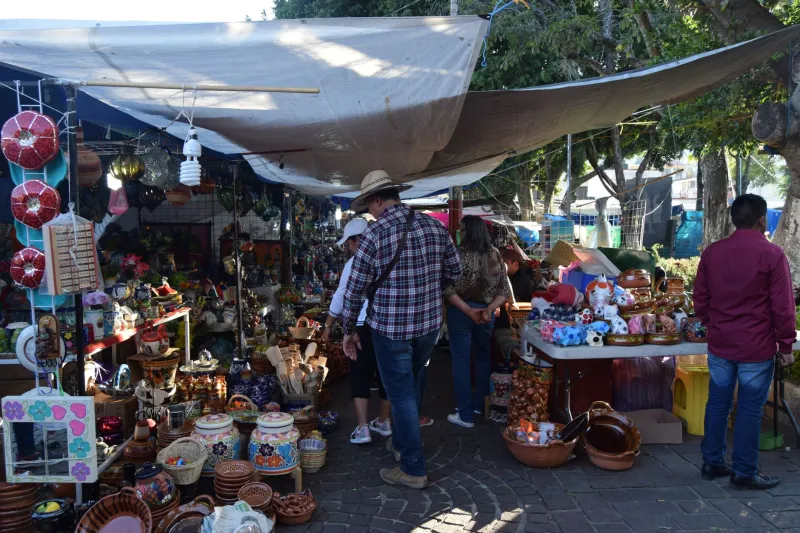
Somewhere in a market in Santa Fe, there's a hand-thrown ceramic bowl with a deep turquoise glaze that I still think about. I held it for a solid three minutes. I turned it over, felt the weight of it, imagined it sitting on my kitchen counter back home. And then I set it down, walked out into the afternoon sun, and caught a shuttle to the plaza.
That was four years ago. I can describe that bowl in more detail than I can describe half the things I actually brought home from that trip.
There's something going on there, and it's worth pulling apart.
The Brain Files the Almost Differently
Psychologists have a name for the way unfinished or interrupted experiences stick in memory longer than completed ones: the Zeigarnik effect. Originally studied in the context of tasks and to-do lists, the basic idea is that the brain keeps an open loop for things that don't reach resolution. When you buy something, the loop closes. Transaction complete. Object acquired. Memory filed.
But when you walk away? The loop stays open. Your brain keeps returning to it, turning it over, wondering. Was it the right call? Would it have looked good? Did someone else pick it up ten minutes later?
That open loop is doing something kind of remarkable — it's keeping the experience alive in a way that possession never could.
This isn't just theoretical. Think about the last trip where you came home with a full bag. Now think about the specific items. Can you even name them all without going to look? Probably not. But the thing you almost bought? That one you remember.
The Ruthless Curator's Secret
There's a type of traveler who moves through markets and shops with a kind of deliberate restraint. They pick things up, they consider, and they put things back. Not because they can't afford it or because they're minimalists performing a lifestyle — but because they've learned, through enough trips, that the object rarely delivers on what the moment promised.
These are the travelers who come home and can actually tell you about their trips, because they weren't spending energy managing stuff. They weren't calculating whether the ceramic bowl would survive checked baggage. They weren't wondering if they'd overpaid at the register or if they could find it cheaper at the next stall.
They were just... there. Present. Letting the experience be the experience.
And here's the counterintuitive thing: they often think about the things they left behind more vividly than the things they brought home. Because those left-behind objects are still attached to the full sensory memory of the moment — the smell of the market, the quality of the light, the sound of the vendor's voice. The bought object gets detached from all of that the moment it gets wrapped in tissue paper.
What 'Just One More Thing' Is Really Asking
We've all felt it — that particular pull at the end of a trip. You're running low on local currency. Your bag is already at capacity. And then you see something. Just one more thing. Something small. Something that feels like it will hold the trip together somehow, like a pin through a butterfly.
But what is that impulse actually about? Because it's rarely about the object.
It's about not wanting the trip to end. It's about trying to make the experience transferable — to carry some fragment of it back through the airport and into your regular life. Which is a completely human thing to want. Nobody wants to land at O'Hare and feel the trip dissolve before they've even reached baggage claim.
The problem is that objects are pretty bad at doing that job. They sit on shelves. They collect dust. They get moved to the garage. And eventually they become things you can't quite remember buying, in a place you can barely picture anymore.
The moment you said no, though? That one's still sharp.
The Memory You Can't Lose at the Airport
There's real freedom in the decision to leave something behind. Not the smug, Instagram-caption kind of freedom — just a quiet, private sense that you trusted yourself to remember without a prop.
Because that's what saying no to the souvenir is, at its core: a bet on your own memory. A belief that what happened there is already inside you, and it doesn't need a ceramic bowl or a woven bracelet to prove it.
Some of the most vivid travel memories people carry are rooted in exactly this kind of restraint. The painting they couldn't afford and didn't pretend to. The jacket they tried on and hung back up. The piece of jewelry that was beautiful but wasn't theirs. These near-misses have a texture to them that full acquisitions often don't.
Maybe because when you walk away, you're not walking away from the thing. You're walking away with the moment. And that's a trade worth making.
So What Do You Do With That?
Next time you're standing in a shop somewhere interesting, holding something you're not sure about — try this. Give yourself full permission to want it. Really sit with the wanting. Notice what it feels like, what it looks like, what the moment around it sounds and smells like.
And then, if you're not certain, put it down.
Walk out. Grab a coffee. See what happens in the next hour.
My guess is you'll still be thinking about it on the plane home. And the plane home after that. And that's exactly the point — you just made a memory that doesn't need a carry-on.