The Hardest Part of Any Trip Is Walking Back Through Your Own Front Door
When the Trip Is Over but the Shift Has Just Begun
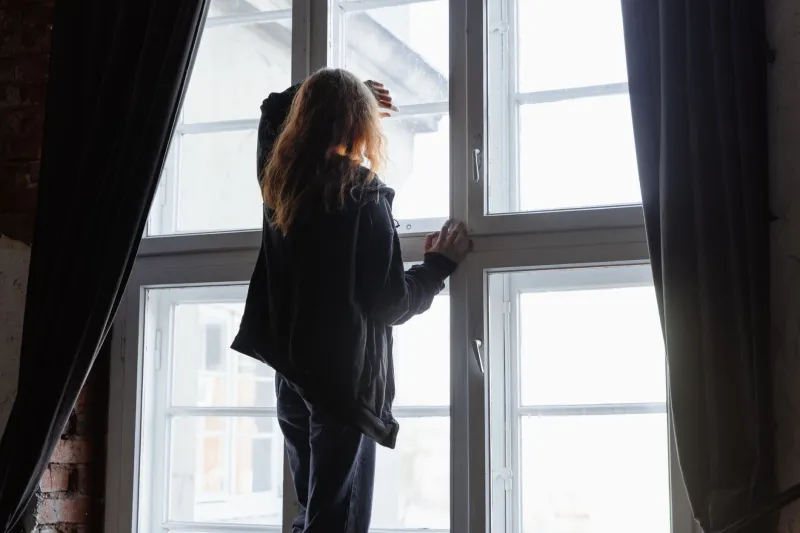
You land at O'Hare or LAX or Hartsfield-Jackson, bleary-eyed and carrying a bag full of dirty clothes and maybe a few trinkets you already feel slightly embarrassed about buying. You Uber home. You drop everything on the floor. You stand in your kitchen — your kitchen, the one you've stood in a thousand times — and something feels off.
Not wrong, exactly. Just... different. Like someone very subtly rearranged the furniture of your life while you were gone, except they didn't, and you know they didn't, and that's the disorienting part.
This is the moment nobody really talks about. Not the Instagram post of the Amalfi Coast, not the travel tips listicle, not even the heartfelt journal entry you wrote on your last night abroad. The quiet, slightly vertiginous experience of returning home as someone who has been, however briefly, somewhere else.
And for a lot of travelers, this is where the real transformation actually begins.
Seeing the Familiar Like a Stranger Would
Marcus had lived in the same Denver neighborhood for eleven years before he spent three weeks traveling through Japan. He knew every coffee shop, every shortcut, every neighbor's dog by name. He thought he knew the place completely.
"I came back and I just started noticing things," he said. "Like, really noticing. The mountains on a clear morning — I'd stopped seeing them. My neighborhood has this incredible park I'd basically been using as a dog-walking throughway for a decade. I sat in it for an hour one afternoon after I got back and thought, this is extraordinary. Why did I need to go to Kyoto to remember that?"
This phenomenon — the way travel recalibrates your perceptual attention — has a name in some academic circles: the "re-entry effect." When you've been immersed in novelty, your brain's attention systems get a kind of reset. You return home with fresh eyes, temporarily freed from the cognitive shortcuts that make familiar places invisible.
The tragedy is that it usually fades. Within a few weeks, the mental fog of the ordinary settles back in. The mountains become wallpaper again.
But some travelers find ways to hold onto it longer — or to let the shift go deeper than just momentary appreciation.
The Relationships You Come Back To
Travel doesn't just change how you see places. It changes how you see people — including the ones who never left your zip code.
Denise, a middle school teacher from outside Atlanta, came back from six weeks in Southeast Asia to a marriage that felt, she said, like it was "in a different language than when I left — but in a good way."
"I'd been so deep in my routines that I'd stopped being curious about my husband," she explained. "I came home and I literally asked him questions I hadn't asked in years. What's he thinking about? What does he want? He thought I was being weird. But I'd just spent six weeks being intensely curious about everything and everyone around me. I didn't want to turn that off just because I was home."
This is one of the quieter gifts that extended travel can offer: a reminder that curiosity isn't just for foreign places. The people in your life, the ones you think you know completely, are far more layered than daily routine allows you to see. Distance has a way of making that obvious again.
When Home Becomes the New Destination
There's a particular kind of traveler who returns from a trip and starts doing something unusual: they become a tourist in their own city. They book a walking tour they've always ignored. They go to the museum they've driven past for fifteen years. They eat at the regional cuisine restaurant downtown that celebrates the very food culture their grandparents brought over, which they somehow never prioritized before.
This isn't performative. It's a genuine recalibration — a decision to apply the same quality of attention abroad to the life they already have.
Samantha, a freelance designer from Portland, Oregon, described it as "starting chapter two of my own story." She'd spent two months backpacking through South America and came home determined not to let the experience just become a memory she occasionally referenced at dinner parties.
"I started treating my own life like a place worth exploring," she said. "My city, my neighborhood, my relationships, my creative work — I wanted to be as present with all of it as I'd been when I was somewhere completely foreign."
That's a harder practice than it sounds. It requires resisting the pull of autopilot, which is strong and comfortable and extremely well-paved.
The Transformation That Travel Actually Offers
We sell travel — to ourselves and to each other — as a way to escape. And it is that. But the more honest and interesting thing it does is reflect. When you step out of your ordinary life long enough, you start to see its actual shape. What you value and what you've just been doing out of inertia. What genuinely nourishes you and what just fills time. Who you want to be versus who you've been defaulting to.
None of that clarity requires a plane ticket to anywhere specific. But the act of going — of being genuinely elsewhere, genuinely uncomfortable, genuinely new — seems to be what shakes it loose.
The front door is the hardest threshold of any trip, not because home is difficult, but because walking back through it means deciding what to do with everything you just learned. You can unpack your bag and let the ordinary close back over you like water. Or you can carry a little of that foreign light into the rooms you already know and see what it illuminates.
That choice — made in the quiet of your own kitchen, in your own city, in the life that was always yours — might be the most important part of the journey.