Leave the Blank Spaces Blank: Why Unscheduled Hours Are the Real Heart of Any Trip
The Overpacked Itinerary Problem Nobody Talks About
You've been there. You've been there. Seventeen tabs open on your browser, a color-coded spreadsheet, a downloaded offline map with forty-three saved pins, and a vague but persistent anxiety that you might miss something. American travelers, bless us, are extraordinarily good at treating a vacation like a project with deliverables.
And then you come home exhausted, scrolling through photos of monuments you barely remember standing in front of, wondering why the whole thing felt a little like a checklist rather than a chapter of your life.
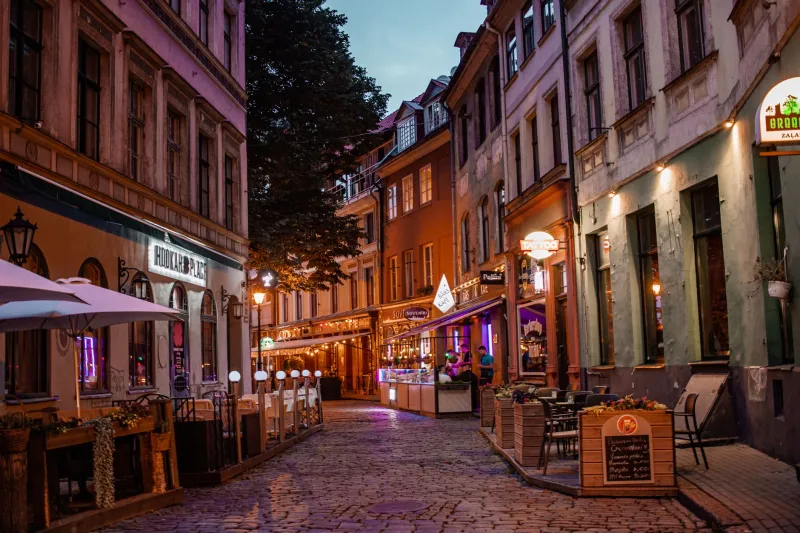
Here's the thing nobody puts in the travel guides: the best stories almost never come from the places you planned to visit. They come from the coffee shop you ducked into because it started raining. The side street you wandered down because something smelled incredible. The hour you spent sitting on a bench watching pigeons because your feet gave out and you had absolutely nowhere to be.
Those are the moments that actually stick.
What Psychology Tells Us About Unstructured Time
There's real science behind why breathing room in a trip changes everything. Researchers who study what's sometimes called the "peak-end rule" have found that our brains don't remember experiences as a continuous video — we remember specific emotional peaks and how things ended. An overscheduled trip full of competent, perfectly executed sightseeing tends to flatten out into a blur. But one surprising, spontaneous moment — a conversation with a stranger, a wrong turn that led somewhere extraordinary — registers as a genuine peak.
Beyond memory, there's something to be said about the mental state that unstructured time creates. When you're not racing to the next thing, your nervous system actually relaxes enough to let curiosity take the wheel. You start noticing. The texture of a neighborhood, the rhythm of how locals move through their afternoon, the small weird beautiful details that don't exist on any must-see list. You become, in the truest sense, present.
Travelers who deliberately build margin into their trips aren't being lazy. They're being strategic about what kind of experience they actually want to collect.
What a Deliberate Detour Actually Looks Like
Let's be specific, because "leave room for spontaneity" can feel like vague advice. A deliberate detour isn't accidental — it's an intentional decision to not plan a chunk of your trip and to commit to that emptiness even when your type-A instincts start whispering.
Maybe it looks like blocking off an entire afternoon in Lisbon with no agenda beyond walking in a general direction. Maybe it's waking up in Nashville and deciding your only goal before noon is to find the most interesting breakfast you can without using Yelp. Maybe it's giving yourself permission to spend two hours at a farmers market in a small Oregon coastal town instead of driving to the next "scenic overlook" on your route.
The detour is deliberate because you chose it. You protected that time from being colonized by another reservation, another tour, another attraction with a gift shop at the exit.
Some travelers find it helpful to think of their trip as having a skeleton and some flesh, but also needing skin — the unplanned outer layer that actually interacts with the world. Plan the skeleton: your flights, your accommodation, maybe one or two things you truly cannot miss. But leave the rest to breathe.
The Stories That Come Back With You
Ask almost anyone about a trip that really changed them and listen carefully to what they describe. Rarely is it the famous thing they saw. More often, it's something incidental. The night they ended up at a stranger's birthday party in Mexico City because they wandered into the wrong bar. The afternoon they got completely lost in a Tokyo neighborhood and discovered a tiny museum dedicated entirely to instant noodle history. The morning in New Orleans when they sat on a stoop eating a beignet alone and watched the city wake up and felt, inexplicably, like they belonged there.
These experiences share a common thread: they happened in the margins. In the gaps between the planned things. They required space — time that wasn't already spoken for.
And they became stories. Real ones, the kind you tell for years.
Rethinking What a "Good" Trip Even Means
American travel culture has a complicated relationship with productivity. We're conditioned to justify rest and leisure by what we accomplished during it. "We hit six countries in ten days." "We saw every major museum." "We did all the things."
But there's a different way to measure a trip's success, and it has nothing to do with how many pins you dropped on a map. Did you feel something unexpected? Did something surprise you? Did you come home with a story you couldn't have predicted before you left?
If the answer is yes, you probably left some blank space somewhere along the way.
Chapter two of any great journey — whether it's a literal trip or just the evolution of how you travel — often begins the moment you stop trying to fill every hour and start trusting the empty ones. The margins of your itinerary aren't wasted space. They might just be where everything worth remembering actually happens.