Pack Light, Bring Home More: The Case for Collecting Skills Instead of Stuff
There's a particular kind of buyer's remorse that sets in somewhere around your second airport layover on the way home. The hand-painted ceramic bowl you were so sure about is now wrapped in three layers of your dirtiest laundry, wedged into a corner of your suitcase, and you're already doing the mental math on whether it'll survive baggage claim. Meanwhile, the thing that actually changed you — the thing that rewired a small but meaningful part of how you move through the world — is sitting quietly in your head, completely unbreakable.
That's the souvenir nobody talks about enough.
The Gift Shop Is the Last Place You Should Be Looking
American travelers spend billions of dollars annually on souvenirs, and the overwhelming majority of those purchases end up in one of three places: a junk drawer, a donation bin, or a shelf that collects guilt alongside dust. We buy things because buying feels like proof. Proof that we were there, that the experience was real, that we brought something of the place back with us.
But what if the proof didn't have to be physical?
The travelers who consistently report the most meaningful, lasting impact from their trips aren't the ones who came home with the most stuff. They're the ones who came home different — with a new way of doing something small, a shift in perspective, a habit borrowed from somewhere else and quietly made their own.
What a Kitchen in Oaxaca Actually Teaches You
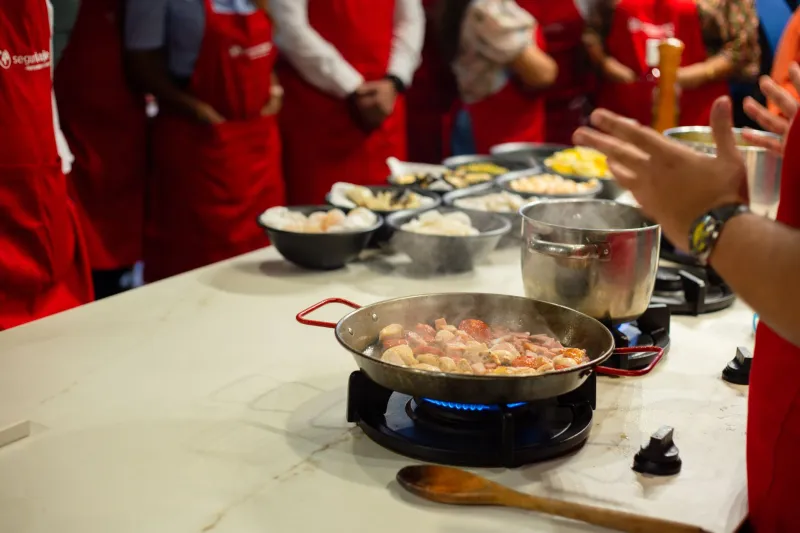
Let's get specific, because abstract talk about "mindset shifts" tends to slide right off. Think about someone who signs up for a cooking class in Oaxaca — not because they're particularly serious about Mexican cuisine, but because it seemed like a fun afternoon activity. Two hours later, they're learning that a proper mole isn't something you rush. That you toast the chiles until the kitchen smells like something between smoke and memory. That patience, in this context, is not a virtue — it's an ingredient.
That lesson doesn't stay in Oaxaca. It shows up back home in the way they approach a slow Sunday dinner, or the way they stop trying to shortcut recipes that need time. The kitchen taught them something about process that no amount of reading a cookbook would have delivered the same way.
This is what intentional skill collection looks like in practice. You show up curious, you pay attention to how people do things — not just what they're doing — and you leave with something transferable.
The Barcelona Conversation You Didn't Expect to Have
Language is another one. Not fluency — that's a different project entirely — but the social architecture of how people communicate in different cultures. Spend a few days in Barcelona and you start noticing something: conversations breathe differently there. People talk over each other without it being rude. Silence doesn't get filled out of anxiety. There's a comfort with interruption that reads as engagement rather than disrespect.
Bring that observation home and suddenly you're less twitchy about conversational overlap at a dinner party. You start reading "talking at the same time" as enthusiasm rather than aggression. A small recalibration, sure — but those small recalibrations stack up.
The skill here isn't Spanish. It's a new template for what connection sounds like.
Japan's Quiet Lesson in Problem-Solving
Then there's the operational stuff — the way certain places have solved logistical problems so elegantly that you can't help but import the approach. Japan is the obvious example, and it's obvious for good reason. The precision, the quiet efficiency, the way public systems are designed with the user's experience as the actual priority rather than an afterthought — all of it adds up to a kind of environmental education in systems thinking.
Travelers who spend real time there often come back with a new instinct: before getting frustrated with a broken process at work or at home, ask first whether the system is the problem, not the people inside it. That's a framework, and it's genuinely useful in a country where we spend a significant amount of energy being annoyed at things that are structurally broken.
How to Actually Do This Intentionally
Here's the honest part: most of this happens by accident. You're not usually standing in a market thinking, I'm going to consciously absorb this practice and integrate it into my daily life. It happens because you were present, because you were paying attention to something other than your phone or your next reservation.
But you can make it more deliberate. A few approaches that actually work:
Ask the how, not just the what. When something impresses you — a meal, a service experience, a way a city handles its parks — resist the urge to just admire it. Ask how it works. Ask why it was done that way. The answer is usually where the transferable insight lives.
Take notes on behavior, not just sights. Your travel journal (or your Notes app, no judgment) doesn't have to be a log of places you visited. Write down what you noticed people doing — how the baker interacted with regulars, how the hotel staff handled a complaint, how kids played in a public square. Behavior is the curriculum.
Give it thirty days when you get home. The skills and habits you pick up abroad have a half-life if you don't use them. Pick one thing you want to carry forward and consciously apply it for a month. By then, it's yours.
The Chapter Two Mentality
There's a reason this site is called Chapter Two. Travel, at its best, isn't a vacation from your life — it's a revision of it. You go somewhere, something shifts, and you come back writing a slightly different version of your daily story.
The ceramic bowl might chip. The magnet might fall off the fridge. But the way you now let a sauce simmer instead of cranking the heat, the way you've gotten a little more comfortable sitting in silence, the way you now ask why does this system work this way before you get annoyed at it — those don't break.
That's the luggage worth packing.