When the Song Knows More Than You Do: How Living Abroad Rewrites the Music You Grew Up With
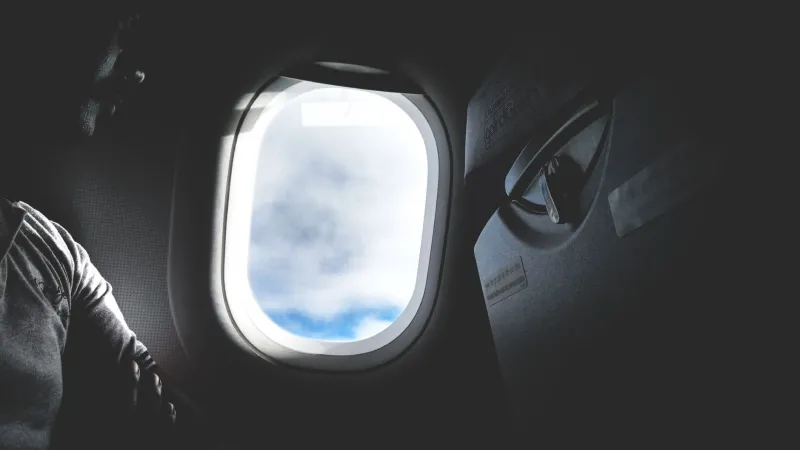
Somewhere over the Atlantic, headphones in, somewhere between the life you built abroad and the one waiting at baggage claim, a song comes on. You've heard it a thousand times. It was the soundtrack to a high school drive, a college dorm, a lazy Sunday in your childhood home. But this time — this time it sounds completely different. Not because the song changed. Because you did.
This is the part of travel nobody really warns you about.
We talk endlessly about reverse culture shock: the weird grief of coming home, the exhaustion of re-explaining yourself, the strange smallness of a bedroom that used to feel like the whole world. But the music thing? That tends to sneak up on people. And once it happens, there's no un-hearing it.
Your Brain Files Songs Like Postcards
Here's the thing about music and memory — they are, neurologically speaking, roommates. The hippocampus, the part of your brain responsible for forming and retrieving memories, is deeply tangled up with the auditory cortex. When you hear a song during an emotionally significant moment, your brain essentially staples them together. The song becomes a container. A time capsule.
So when you spend six months living in Lisbon, or teaching English in Chiang Mai, or doing a slow travel year through South America, you're not just collecting experiences. You're building a whole new filing system. New smells, new textures, new sounds — all of it getting catalogued alongside whatever was playing on your phone at the time.
Then you come home. And your old filing system collides with the new one.
The result is this disorienting emotional double exposure — where a Springsteen song that used to mean Friday nights in New Jersey now somehow also conjures a specific café in Porto where you ate the same pastry every morning for three weeks. The song didn't move. But the person listening to it absolutely did.
The Playlist That Broke Me (In the Best Way)
I had a shuffle playlist I made in college — one of those embarrassingly earnest ones with a name like "late nights & big feelings." I didn't touch it while I was abroad. Felt too sentimental, maybe. Or maybe I was protecting it, saving it for the version of me who would eventually need it again.
I hit play somewhere around my second week back home, sitting in my car in a Target parking lot in the midwest, and I genuinely was not prepared for what happened.
A Phoebe Bridgers song came on. One I'd listened to probably sixty times in my old apartment. And instead of taking me back to that apartment, it took me to a night market in a city I hadn't lived in for four months. The specific quality of the humidity. The way the vendor lights reflected off wet pavement. A conversation I'd had with a stranger who spoke three languages and none of them were mine.
I sat in that parking lot for a full song cycle and didn't go into Target. The errand felt beside the point.
Why Home Sounds Foreign After You've Been Away
Reverse culture shock gets framed mostly as a social experience — the awkwardness of reconnecting, the frustration of being misunderstood, the exhaustion of shrinking back into a version of yourself that no longer quite fits. But it's also profoundly sensory.
The sounds of home — traffic patterns, the particular hum of American retail spaces, the cadence of regional accents — register differently when you've been calibrated to somewhere else. And music, sitting at the intersection of emotion and memory and sound, becomes a kind of tuning fork for all of it.
Psychologists call this "context-dependent memory" — the phenomenon where the environment in which you learned something affects how easily you can retrieve it later. But travel adds a wrinkle. Because now you've got multiple contexts layered on top of each other. The song doesn't just belong to one time and place anymore. It belongs to all of them simultaneously.
Which means listening to music after extended time abroad is a little like holding up a prism. The same light, but suddenly you're seeing every wavelength it's made of.
Building the Reverse Culture Shock Playlist (On Purpose)
Some people stumble into this experience accidentally, like I did in the Target parking lot. Others have started doing it intentionally — curating what you might call a "reentry playlist." Songs chosen not for comfort, but for honest reckoning.
The idea is simple: you pick music that meant something specific before you left, and you let yourself feel what it means now. You're not trying to go back. You're taking inventory of how far you've traveled — not in miles, but in the way you understand your own life.
A few loose rules that seem to help:
Don't rush it. Give the song your actual attention. Not background listening. Sit with it.
Notice what images come up. Is it the memory you expected? Or something new? Let the surprise tell you something.
Write it down if you can. Not a review, not an analysis. Just: what did you see? What did you feel? Where did it take you?
Don't try to resolve the double exposure. The point isn't to pick which memory wins. The point is to hold both at once and recognize that you're a person big enough to contain them.
The Part Nobody Talks About
There's a particular kind of loneliness in this experience that's hard to name. Because you're home. You're supposed to feel settled. The people around you are glad you're back, and they mean it. But you're sitting there listening to a song from eighth grade and suddenly missing a street you walked down for four months in a city most of your friends have never visited.
And the song knows. It holds both places at once, even when you're not sure you're allowed to.
That's the thing about travel and music — they both operate on a frequency that bypasses logic. You can explain reverse culture shock to someone. You can describe the disorientation, the grief, the recalibration. But when a song hits you sideways in a parking lot and you cry over a night market you didn't even know you'd miss this much — that's not something you explain. That's something you just live through.
And then, eventually, you make peace with the fact that the song gets to be about both places now. That your life is wide enough to hold all of it.
That's not a problem. That's the whole point of going.