You Boarded That Plane as One Person and Landed as Someone Else Entirely
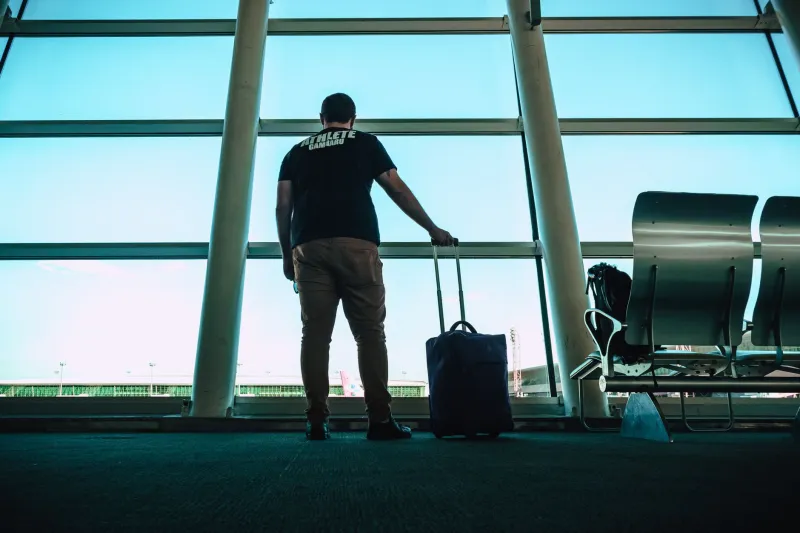
There's a specific kind of weirdness that settles in around day two back home. The coffee tastes the same. Your couch is exactly where you left it. Your group chat is full of the same inside jokes. And yet — something's off. Not broken, not wrong. Just off. Like your old life is a coat you left hanging by the door and now you're not entirely sure it still fits.
That feeling has a name, even if nobody really hands you a pamphlet about it at baggage claim. It's identity shift. And it's not a side effect of travel. It's the whole point.
The Science Isn't Just Metaphor Anymore
For a long time, the idea that travel "changes you" lived firmly in the territory of inspirational poster copy. Nice to say. Hard to measure. But researchers in personality psychology — including work coming out of institutions like NYU and the University of Melbourne — have found that immersive cross-cultural experiences genuinely alter measurable personality traits. Openness to experience increases. Rigid thinking softens. The neural pathways you use to process novelty get a serious workout, and like any muscle, they come back stronger.
This isn't just about seeing new things. It's about being forced to operate differently. When your usual scripts don't work — when you can't read the menu, can't catch the social cue, can't default to your usual charm or competence — your brain has to improvise. And improvisation, repeated over days or weeks, starts to feel less like panic and more like fluency. That new fluency doesn't evaporate at the airport. It comes home with you.
The cellular metaphor is more literal than poetic: your stress responses shift. Your tolerance for ambiguity expands. The version of you that boarded the outbound flight genuinely no longer exists in quite the same configuration.
The Divide Nobody Talks About
Here's what travel blogs don't usually cover: the quiet grief that can come with transformation. Because when you come back different, you're also coming back to people and systems that knew the old you. Your partner still expects you to hate cilantro. Your boss still assumes you'll avoid conflict in meetings. Your friends still think you're the one who always needs a plan.
And maybe some of those things are still true. But some of them aren't anymore, and you haven't had time to figure out which is which.
This creates an invisible divide — not a dramatic one, not the kind that leads to life implosions — but a subtle fault line between who you were before departure and who stepped off the return flight. Navigating that divide is uncomfortable. It's also completely normal, and more importantly, it's a sign that the trip actually did something.
The people who come back completely unchanged? They went on vacation. The people who come back a little disoriented, a little harder to predict, a little more likely to pause before answering a question they would have previously answered on autopilot? They went on a journey. There's a difference.
Why Dissonance Is the Goal, Not the Problem
American culture has a complicated relationship with discomfort. We optimize, we resolve, we fix. So when you return from a trip feeling unsettled, the instinct is to shake it off and get back to normal as fast as possible. Reentry routines, jet lag hacks, back-to-work momentum — all of it conspires to rush you past the very thing worth sitting with.
The dissonance is information. It's telling you exactly where growth happened.
If you came back from three weeks in Southeast Asia and feel slightly impatient with your own tendency to over-explain things, that's data. If you spent two weeks in Portugal and now find yourself genuinely curious about strangers in a way you weren't before, that's data. If a month in Japan left you oddly moved by quiet, by restraint, by the dignity of doing small things well — that's not just a phase. That's a recalibration.
The question isn't how to get back to who you were. The question is how to integrate who you're becoming.
The Old Self Isn't Gone — It's a Foundation
Here's the part that tends to get lost in the more dramatic versions of this narrative: transformation doesn't mean erasure. The person you were before that trip is still in there. Your history, your humor, your specific brand of stubbornness — none of that dissolves in the departure lounge. What travel does is add layers. It gives you more material to work with. More reference points. A wider operating range.
Think of it less like becoming a different person and more like becoming a more complete version of the one you already were. The gap you feel between old self and new self isn't a wound. It's growing room.
Some of the best decisions people make after significant travel — career pivots, relationship reckonings, creative pursuits they'd shelved for years — come directly from standing in that gap and asking honest questions. Who do I actually want to be now that I've seen a few more options?
Letting the New Version Settle
If you've recently come back from somewhere that moved you, here's the only real advice worth offering: don't rush the re-entry. Give the new version of you a little room to breathe before you snap back into every old groove.
Have the conversation you've been putting off. Try the thing you said you'd try when you got home. Let your opinion change on something you were previously certain about. Eat the cilantro.
The person who boarded that plane is gone in all the best ways. The person who landed is still figuring out what that means — and that figuring-out is the real journey, the one that doesn't end when you wheel your suitcase through the front door.
Chapter two always starts a little disorienting. That's how you know it's worth reading.