Buried Treasure: What a Forgotten Souvenir Teaches You About Every Trip You've Ever Taken
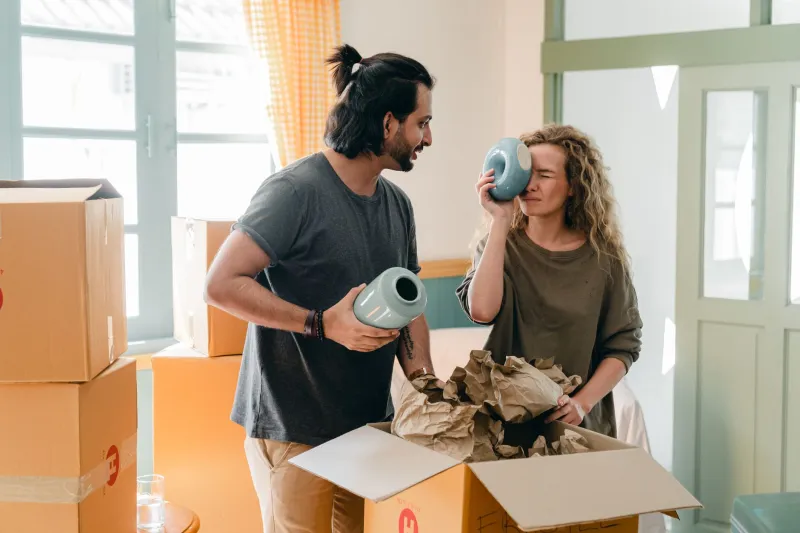
You weren't looking for it. You were digging through a box you'd moved twice without ever fully unpacking — the kind of box that accumulates a strange archaeology of your own life. And then there it was. A small ceramic dish. A crumpled ticket stub from a ferry crossing. A woven bracelet with a broken clasp. Something so minor you'd clearly tossed it in a bag without a second thought, and yet here it is, years later, radiating an energy you can't quite explain.
You hold it in your hand and a whole place comes flooding back — not in a dramatic, movie-montage kind of way, but quietly. A smell. The particular quality of afternoon light. The sound of a language you don't speak. It's disorienting in the best possible way.
This is the strange alchemy of the souvenir you forgot you bought.
The Things We Carry Without Knowing Why
Most of us approach souvenir shopping with some level of intention. You pick out a magnet for the fridge, a scarf for your mom, a bottle of hot sauce that will absolutely explode in your checked luggage. These are deliberate choices — little tokens you handpick to serve as proof of somewhere you've been.
But then there's the other category. The things that somehow ended up in your bag without much ceremony. A postcard you grabbed at a gas station because the image was pretty. A smooth stone you pocketed on a beach walk. A paper napkin with a hand-drawn map someone sketched for you at a bar. These objects were never meant to be keepsakes. You weren't standing in a gift shop, weighing whether the memory was worth twelve dollars. You just... took it. Or someone gave it. Or it fell into your orbit the way certain things do when you're moving through the world with your guard down.
Those are the ones that tend to survive. The intentional souvenirs get displayed, admired, occasionally explained to guests, and slowly fade into background decoration. The accidental ones get buried — and somehow that burial preserves them.
Forgetting Is a Form of Keeping
There's something worth sitting with here: the fact that you forgot about this object doesn't diminish the trip it came from. If anything, it might say something interesting about how memory actually works.
We tend to assume that the things we remember most clearly are the things that mattered most. But travel doesn't really operate on that logic. The moments that rearrange you are often the quiet ones — a conversation that went sideways in the best way, a wrong turn that led somewhere you never would have found otherwise, a meal you ate alone at a counter while watching a city do its thing outside a window. These moments don't always announce their significance in real time. You don't always know, while you're living them, that they're going to stick.
So you forget the bracelet. You forget the dish. You move on to the next city, the next chapter. And the object waits.
Finding it again is a little like getting a letter you wrote to your past self — except you didn't write it on purpose, and the message is less a set of instructions and more a mood. A feeling. A reminder that you were somewhere, fully, even if the specifics have gotten soft around the edges.
What the Object Actually Holds
Here's what's interesting about the rediscovery moment: it's rarely the object itself that moves you. The ceramic dish isn't particularly beautiful. The ticket stub is faded and slightly damp from some long-ago humidity. The bracelet is, let's be honest, kind of cheap.
What you're feeling isn't aesthetic appreciation. It's something closer to recognition — the sense that this small, forgettable thing was present for a version of you that no longer quite exists. A you who was somewhere else, moving differently, noticing different things. A you who was, in some way, in the middle of a chapter you didn't know you were writing.
That's what travel does over time. It doesn't just give you experiences. It gives you selves. And the accidental souvenir is sometimes the only physical evidence that a particular self existed.
The Hierarchy of What Sticks
If you've moved a few times — and most Americans have, given how often we relocate for work, relationships, or just the pull of somewhere new — you've probably done an unconscious triage of your belongings. Some things get donated. Some things get tossed. Some things make every single move without you ever consciously deciding to keep them.
Pay attention to that last category. Those are the things that have earned their place not through display or utility, but through sheer staying power. They survive because some part of you keeps deciding, wordlessly, that you're not ready to let them go.
The forgotten souvenir often falls into this group. It's not in a frame on your wall. It's not in a curated shelf arrangement. It's at the bottom of a box, surviving on instinct alone — yours and, in some strange way, its own.
What You Do With It Now
So you've found the thing. You've held it. You've let the memory wash over you in that particular hazy way that old travel memories do. Now what?
You don't have to do anything grand with it. You don't need to start a shadow box project or write the object a caption for Instagram. You can put it on your desk for a week and let it sit there while you figure out how you feel. You can tuck it back into a drawer, this time on purpose, knowing exactly what it is and what it holds. You can let it prompt a phone call to someone who was on that trip with you, or a solo evening with a glass of wine and a mental walk through streets you haven't thought about in years.
What matters is the pause. The willingness to let a small, dusty thing from a box remind you that your life has layers — that there are chapters behind you worth revisiting, even when you weren't planning to.
The best journeys don't end when you land back home. Sometimes they're just waiting in a box, patient as anything, for the right moment to find you again.
And when they do, that's the story worth telling.