Who Were You Thinking Of? The Surprising Truth Behind the Gifts You Bring Home from the Road
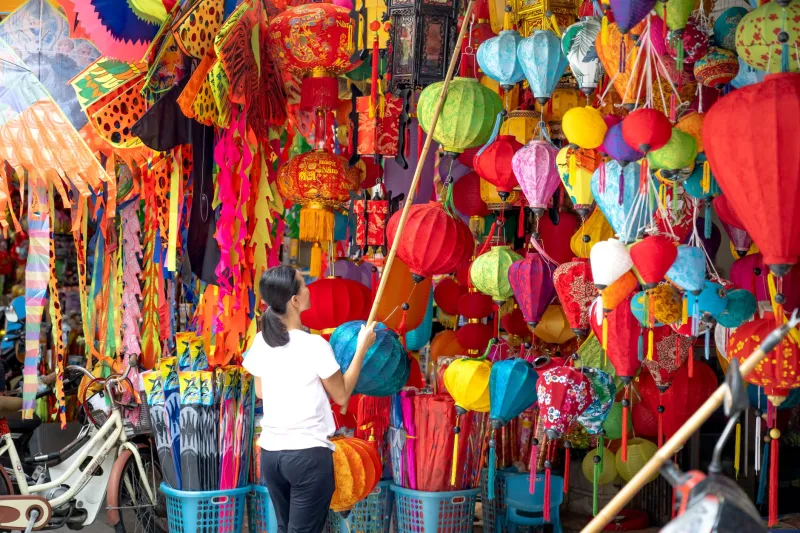
There's a specific kind of pressure that hits somewhere around the second-to-last day of any trip. You've been living inside this new place — eating its food, absorbing its rhythms, mispronouncing things with cheerful confidence — and suddenly you're standing in a market stall or a tiny shop off the main drag, holding something up and thinking: Would she get this? Would he actually use it?
The souvenir you buy for yourself is almost instinctive. It snags your attention, it costs less than you'd spend on a decent dinner, and you justify it in about four seconds flat. Done. But the one you're choosing for your mom, your college roommate, your coworker who waters your plants while you're gone — that one takes real thought. And that thought, it turns out, says a lot more about who you've become than anything you picked up for yourself.
The Invisible Work Happening While You Shop
When you're deep into a trip — past the tourist fog, past the jetlag, past the phase where everything feels like a movie set — you start actually reading a place. You notice what people value. You pick up on what's considered beautiful versus what's just functional. You start to understand, even a little, what makes the locals proud.
And then someone back home pops into your head. Maybe it's your dad, who has strong opinions about craftsmanship and would actually notice that the woodwork on this bowl is hand-carved. Maybe it's your best friend, who's been going through something hard and would probably cry a little over a hand-painted tile that says something she needed to hear. The moment you start filtering a place through someone else's eyes, you're doing something genuinely sophisticated — you're holding two worlds at once.
That's the thing about travel gift-giving that doesn't get talked about enough. It's not just shopping. It's translation. You're taking something rooted in one culture and asking yourself whether it can carry meaning across an ocean, across a personality, across a relationship. That's not a small thing.
What Your Choices Actually Reveal
Pay attention to who you shop for on a trip. The list itself is a kind of autobiography.
Some people buy for everyone — a sweeping, generous haul that includes the neighbors and the dental hygienist. That's not superficiality; it's often a sign of someone who moves through the world with genuine warmth, someone for whom connection is almost reflexive. Others buy for almost no one, and that's not selfishness either — it might mean you've reached a point where you trust that the real souvenir is the conversation you'll have when you get home, not the object.
But the most revealing gifts are the specific ones. The ones where you clearly spent time. The handmade soap you found in a tiny Oaxacan market because you remembered your sister-in-law mentioning she's been into natural skincare. The weird little illustrated book from a Tokyo bookshop that you can't even read but that you knew, knew, your artsy nephew would lose his mind over. The jar of locally sourced honey for the friend who's been baking everything from scratch since the pandemic and never really stopped.
Those gifts require you to hold a mental image of someone — their habits, their humor, their history — and then look at a foreign place and ask, Where are you in here? That's empathy in its most practical, low-key form.
How the Road Rewires the Way You See Your People
Here's the part that sneaks up on you: travel doesn't just change how you see the places you visit. It changes how you see the people you left behind.
You spend a week in Lisbon and you come home thinking about your Portuguese-American neighbor differently — not because anything changed between you, but because you now have a frame of reference for something she's carried her whole life. You spend a long weekend in New Orleans and you call your grandfather on the drive home from the airport because the city made you think about storytelling and legacy in a way that made you miss him.
The gifts you bring back are often the physical evidence of that rewiring. They're proof that someone crossed your mind in a meaningful way while you were somewhere that had nothing to do with them. And the people who receive those gifts — the ones who really receive them, who understand what it means that you thought of them specifically — they feel that. It lands differently than something grabbed at an airport Hudson News.
The Gift That Doesn't Make It Home
There's another version of this story worth telling, and it's the one about the gift you thought about but didn't buy.
Maybe you picked something up for someone you've been drifting from, turned it over in your hands, and then put it back — not because it wasn't right, but because you couldn't picture the moment of giving it anymore. Or maybe you found something perfect for someone you've lost, and the weight of that was too much to carry through the rest of the afternoon.
Those non-purchases are data too. They tell you where your relationships actually live right now, which connections have grown and which have quietly faded. A trip has a way of making that clarity unavoidable.
Bringing the Lesson Back Through the Door
If you want to get more out of your travels — not just more Instagram content, but more actual depth — try paying attention to who comes to mind while you're out there. Not in a transactional, souvenir-checklist way, but genuinely: whose face floats up when you taste something extraordinary? Who would lose it over this weird little alley you found? Who needs to see this view?
Those flashes of connection are your empathy working in real time. The road has expanded your lens, and you're instinctively trying to share that expansion with the people who matter to you. The object you bring back is almost beside the point — it's just the vessel.
The real gift, every single time, is that you were somewhere new and you still thought of them. In a world that moves fast and forgets faster, that's not nothing. That's actually everything.